
Seasons/Availability
Yellow bell peppers are available year-round.
Selection
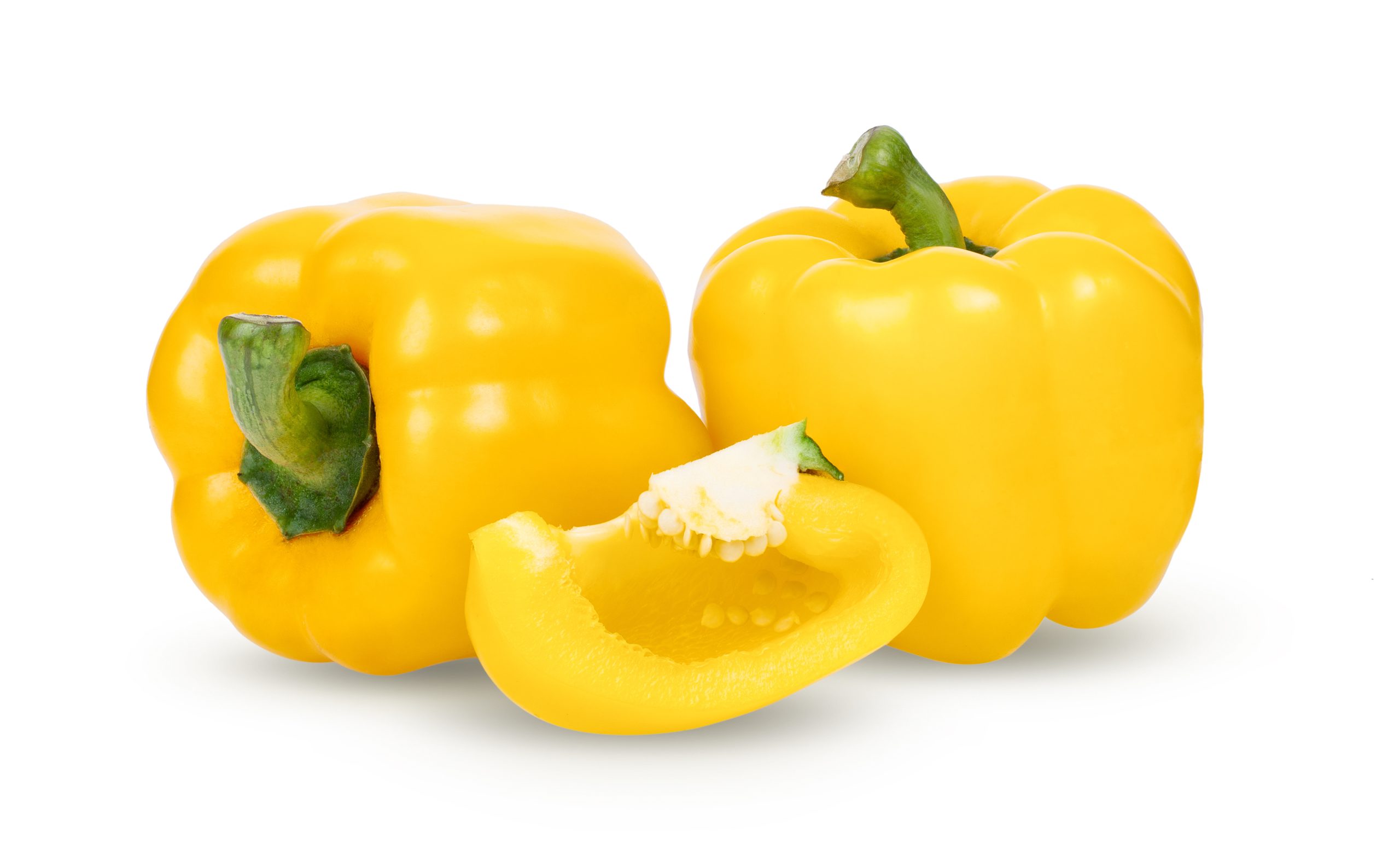
When selecting yellow bell peppers, choose those that have firm flesh with no soft spots or blemishes. Look for peppers that are brightly colored and heavy for their size as this is an indication of ripeness. Avoid peppers with wilted stems, bruises, or wrinkles as these may be signs of age or spoilage.
Storage
Fresh yellow bell peppers can be stored in the refrigerator for up to two weeks. Wrap them tightly in a paper or plastic bag and place them in the vegetable crisper drawer. Peppers can also be frozen for longer-term storage, however, this will affect their texture when thawed.
Usage
Yellow bell peppers are highly versatile and can be used both raw and cooked. They can be added to salads, sandwiches, pizzas, and pastas for a burst of flavor. Yellow bell peppers are also widely used in stir-fries, roasts, casseroles, curries, and soups. Roasting the peppers over an open flame or baking them in the oven will bring out their sweet flavor and tender texture. The peppers can also be chopped, diced, sliced, or julienned and added to a variety of dishes. Additionally, bell peppers can be stuffed with rice, meats, cheese, and vegetables for an easy entrée option.
Nutrition
Yellow bell peppers are an excellent source of vitamins A and C as well as dietary fiber. They also provide trace amounts of potassium, magnesium, and iron. Bell peppers can be served as part of a balanced diet to promote optimal health.
Tips
• Slice yellow bell peppers into thin strips for use in salads or sandwiches.
• Stuff the peppers with cooked meats, cheese, and vegetables before baking for an easy entrée option.
• Roast the peppers over an open flame or in the oven to bring out their sweet flavor and tender texture.
• Add bell peppers to stir-fries, curries, casseroles, soups, and roasts for a burst of flavor.
• Store fresh yellow bell peppers in the refrigerator for up to two weeks or freeze them for longer-term storage.
• Enjoy yellow bell peppers as part of a balanced diet to promote optimal health.
• When selecting bell peppers, look for ones that are brightly colored and firm with no signs of bruising or soft spots.
• Avoid those that have wrinkled skin or appear wilted.
• Rinse the peppers before use and pat them dry with a paper towel.
• Slice off the stem end and discard the seeds before cooking.
• Cook peppers lightly to retain their flavor and texture.
• Mix with other vegetables for a colorful side dish or salad.
• Add bell peppers to sauces, dips, salsas, and relishes to give them an extra kick of flavor.
• Enjoy roasted yellow bell peppers as a simple snack with hummus or guacamole.


