
Seasons/Availability
Banana chile peppers are available in the summer.
Applications
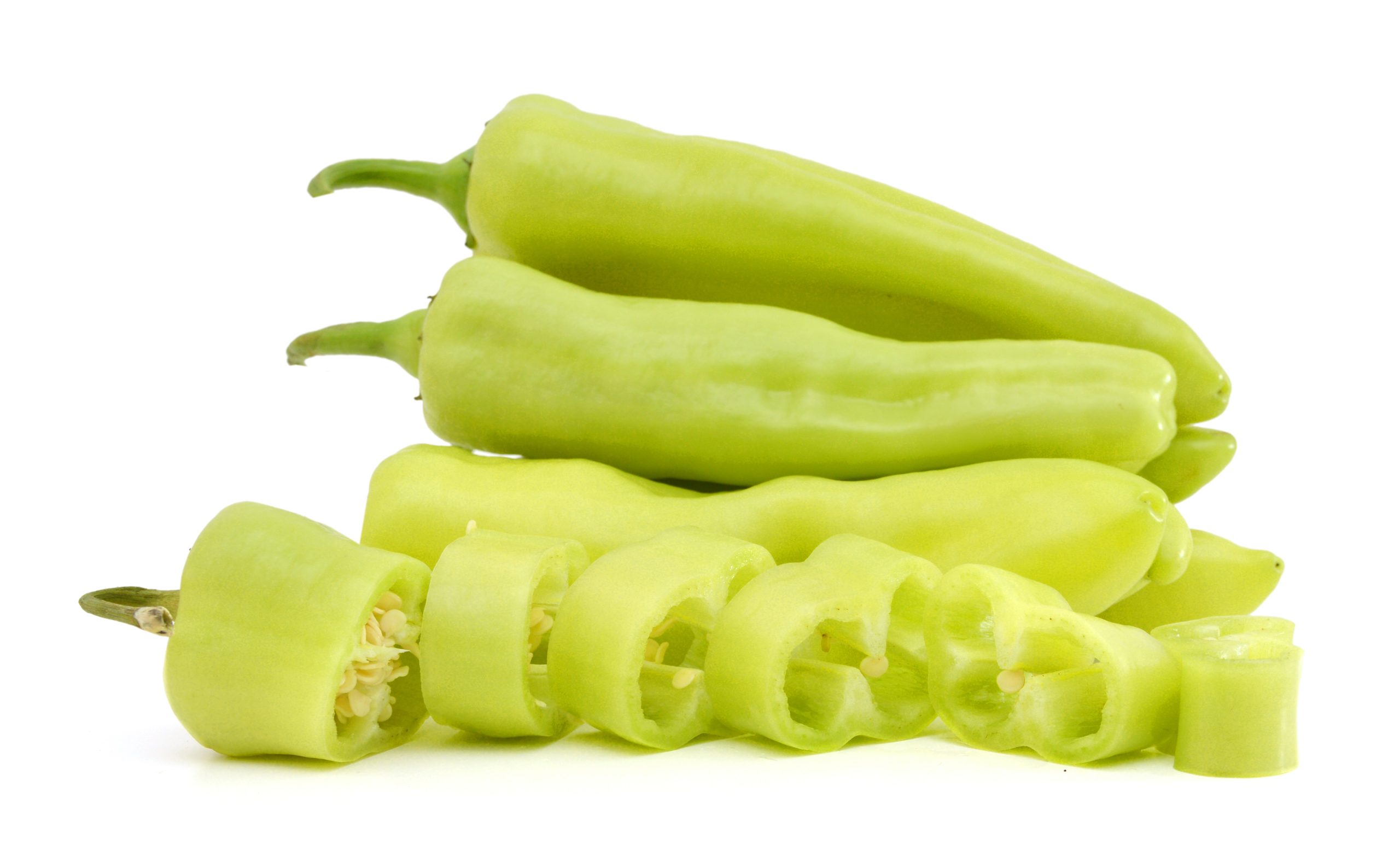
Banana peppers can be used raw or cooked in a variety of culinary applications. They can be served as an appetizer, pickled for extended shelf life, diced and tossed into salads, sliced and added to sandwiches, grilled for fajitas or kebabs, roasted for pizza toppings, stir-fried with vegetables, fried and breaded for poppers, stuffed with cheese or meats, simmered in sauces and soups, and more. The peppers pair well with tomatoes, onions, garlic, greens such as arugula and spinach, pork sausage or bacon bits. Banana chile peppers are also a popular topping on hot dogs. Additionally they can be dried or preserved for later use.
Banana peppers will keep for up to a week when stored in the refrigerator. For extended storage, they can also be frozen or canned.
Nutritional Value
Banana chile peppers are an excellent source of vitamins A and C and provide antioxidant benefits. They are relatively low in calories and contain small amounts of iron, magnesium, calcium, potassium, folate, dietary fiber, carotenoids, and flavonoids. Additionally they contain capsaicin which is responsible for their mild heat. Banana chiles are low on the Scoville scale with their heat rating range from 0-500 SHU (Scoville Heat Units). This makes them one of the least spicy peppers available.
The vibrant yellow color of ripe banana peppers is an indication that they are at their peak flavor. When selecting, look for firm peppers with bright, glossy skin. Avoid those that have blemishes or soft spots. Ripe peppers will be slightly wrinkled and may have small dark marks on the skin. They should be heavy for their size with a sweet aroma. Banana chile peppers can also be found pickled in jars or cans at most grocery stores.
Understanding how to select, store, and cook with banana chiles can help you enjoy this mild pepper in all your favorite dishes!

