
Seasons/Availability
Baby spinach is available year-round.
Current Facts
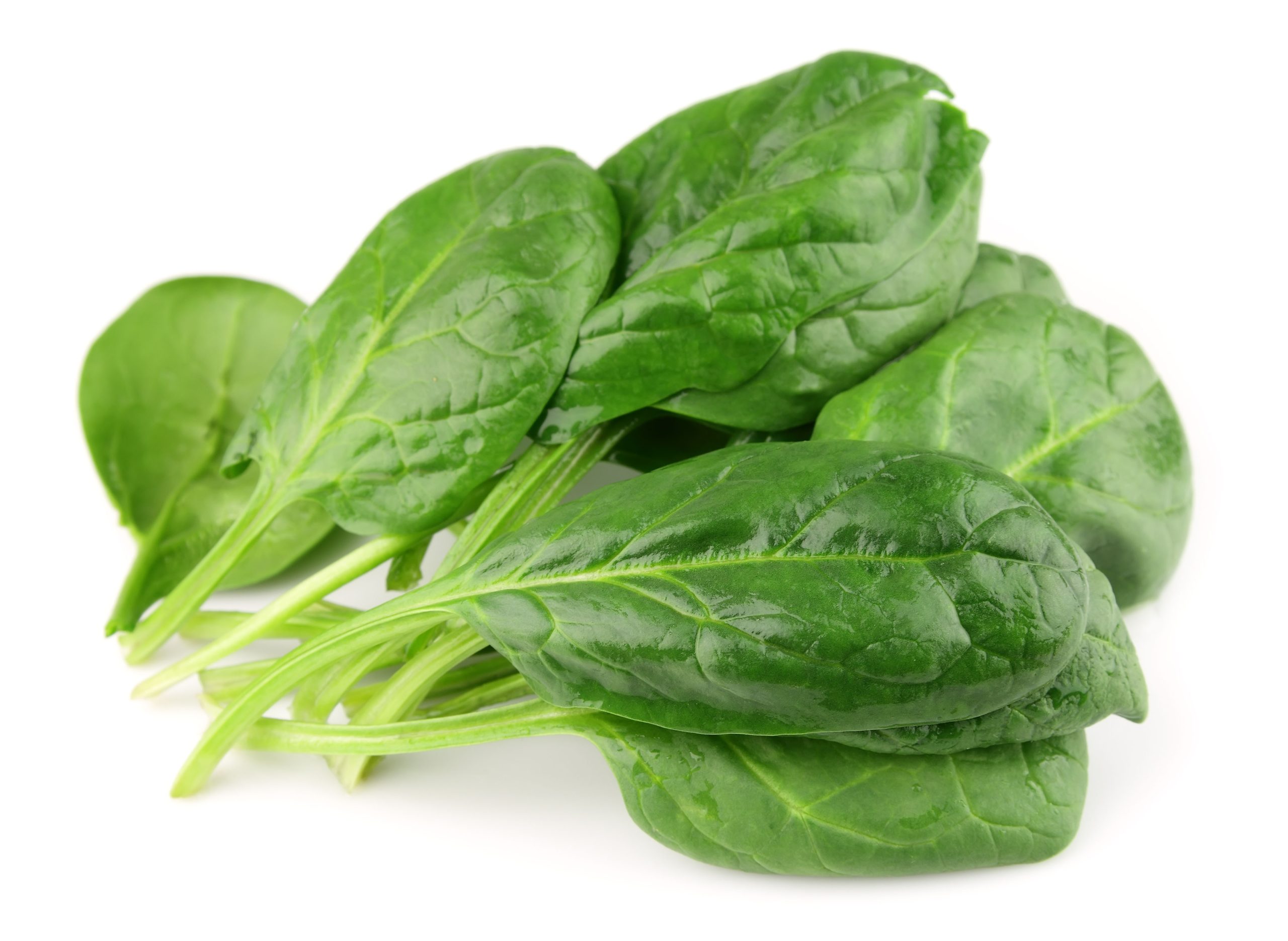
Baby spinach is botanically classified as Spinacia oleracea and belongs to the Amaranthaceae family. It is an edible leafy green vegetable that produces dark green, oval-shaped leaves on thin stems. Baby spinach can be found in several varieties, including Savoy, Flat Dutch, Semi-Savoy, Space Hybrid, and Tyee Hybrid. The name “baby” implies a smaller size than regular full-grown spinach; however, baby spinach does not have a defined length of maturity or age when harvested. Instead, the term “baby” refers to the very young immature leaves that are picked while they are still small for optimum flavor and tenderness.
Nutritional Value
Baby spinach is an excellent source of vitamins A and C, iron, dietary fiber, calcium, potassium, and magnesium. It is also a good source of protein and folate.
Applications
Baby spinach can be used fresh in salads or as a garnish for cooked dishes. Baby spinach has a delicate consistency compared to regular full-grown leaves; thus it can be enjoyed raw when adding texture to salads or sandwiches. It can also be roasted with other vegetables or sautéed with garlic and butter. Baby spinach pairs well with mushrooms, onions, apples, honey, nuts such as pine nuts and walnuts, bacon bits, citrus slices such as oranges and lemons, cheeses including feta cheese and Parmesan cheese, and meat such as pork or steak. Baby spinach can also be used in soups, sautés, pasta dishes, omelets, quiches, pizzas, and casseroles.
The classic combination of baby spinach and strawberries is a popular salad flavor. It can be dressed with balsamic vinegar or a honey mustard vinaigrette for added sweetness. Spinach can also be wilted and served with warm bacon vinaigrette as a side dish. For an easy side dish try adding baby spinach to mashed potatoes or macaroni and cheese for extra nutrition and flavor. Baby spinach may also be cooked into pesto sauce to serve over fish or chicken. Leftover baby spinach can be frozen for later use in a smoothie or soup.
Storage and Handling
Store baby spinach at room temperature, away from direct sunlight, and in a loosely closed plastic bag. Wash leaves thoroughly before consuming. Spinach should be used within three to five days of purchase for optimal flavor and texture. Leftover cooked baby spinach can be stored in an airtight container in the refrigerator for up to four days. Do not wash spinach before storing it in the refrigerator as this will cause spoilage faster. Frozen baby spinach can be kept for up to six months when stored properly. To freeze spinach, rinse it under cold water, pat dry with paper towels, place into freezer bags or containers, and store immediately in the freezer. When ready to use thawed spinach, be sure to cook it thoroughly.
Baby spinach is a nutritious and tasty addition to any meal. With the right preparation and storage techniques, baby spinach can stay fresh for longer periods of time and provide an abundance of flavor and nutrition. Whether you are enjoying it in salads or cooking with it, baby spinach will bring a unique flavor to your meals.
