
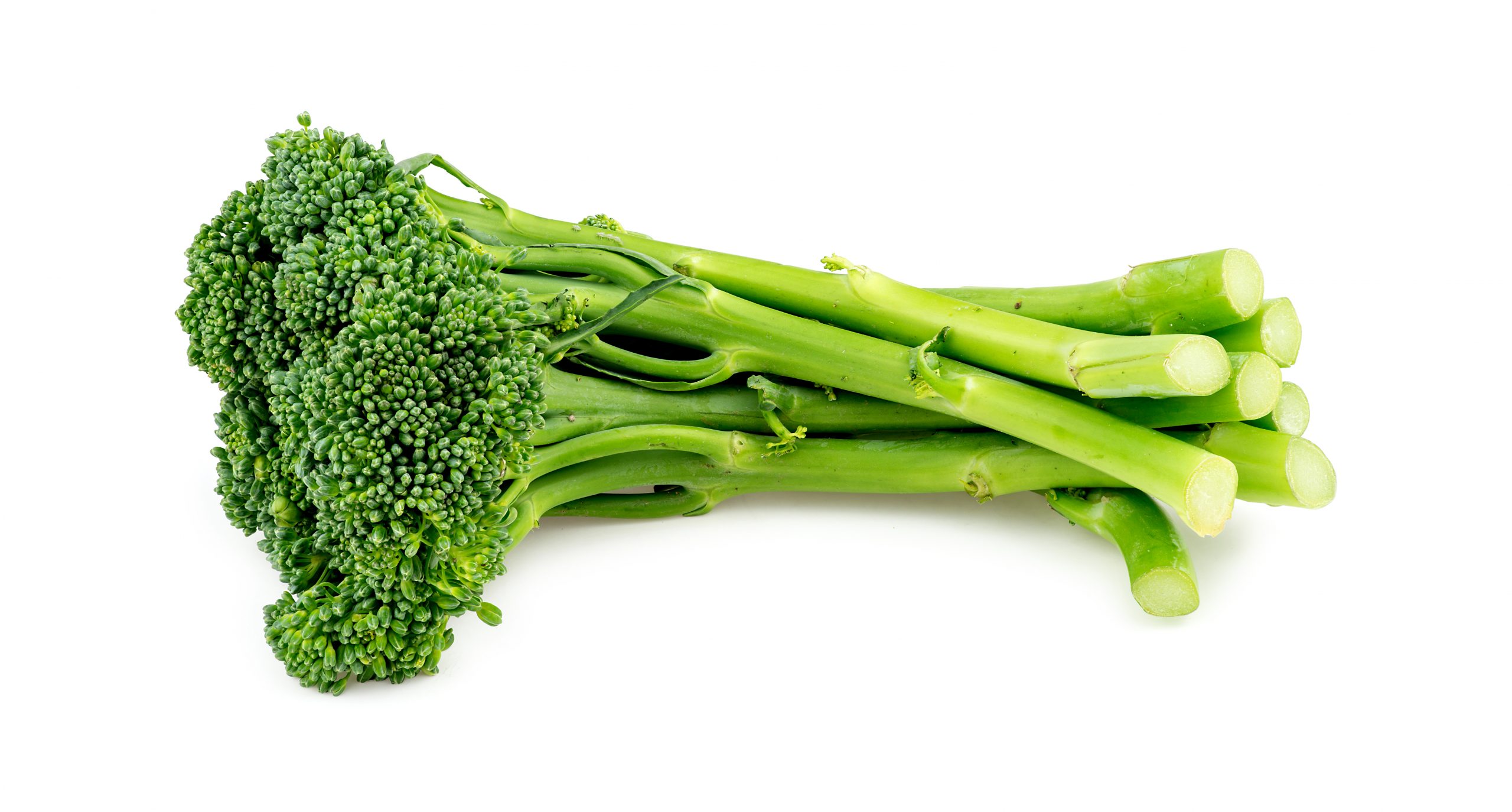
Seasons/Availability
Broccolini is available year-round.
Current Facts
Broccolini® is a trademarked hybrid of broccoli and kai-lan, also known as Chinese broccoli. It was first recognized in the late 1990s when it appeared on supermarket shelves throughout Europe, Australia, New Zealand, and North America. The vegetable is botanically classified as Brassica oleracea var. alboglabra and is related to cabbage and broccoli.
Storage
Broccolini should be stored in the refrigerator crisper drawer, wrapped in a damp paper towel, for up to 4 days. The vegetable will become limp if left out of refrigeration for too long. To freeze, blanch briefly in boiling water before submerging in an ice bath. Place in a sealed plastic bag and freeze for up to 12 months.
Preparation
Broccolini® should be washed and dried before cooking. The entire vegetable is edible, stem and florets. It can be blanched, steamed, boiled, sautéed, stir-fried, or roasted to enjoy its tender texture and mild flavor. Broccolini pairs well with olive oil, garlic, parmesan cheese, and other vegetables. The vegetable can be added to pasta dishes, soups, salads, and stir-fries. It also makes an attractive garnish for many main courses. Broccolini is sometimes referred to as “baby broccoli.” It is also known as a “broccolette” or “asparation.”
The vegetable can be cooked for 4-6 minutes to retain its vibrant color, sweet taste, and crisp texture. If preferred, it can be cooked longer to achieve softer texture and more intense flavor. To prepare for roasting, toss with olive oil and seasonings before spreading in an even layer on a baking sheet. Roast for 15-20 minutes at 425°F (220°C). Alternatively, it can be sautéed quickly over high heat with olive oil and garlic or blanched in boiling water and finished off with butter or cream sauce. Broccolini is also great raw, thinly sliced into salads or used as a crudité.
Nutrition and Benefits
Broccolini is an excellent source of vitamins A, C, and K. It also contains iron, potassium, folate, and calcium. The vegetable is low in calories and fat-free. Additionally, it is rich in fiber which helps to promote regularity and keeps you feeling fuller for longer.
Freezing
To freeze Broccolini, first blanch it by submerging it in boiling water for two minutes then transferring it to an ice bath. Allow the vegetable to cool and drain off any excess water before transferring it to freezer-safe containers or bags. Store the frozen Broccolini® for up to 6 months in the freezer. When ready to use, thaw it overnight in the refrigerator before cooking.

