
Seasons/Availability
Celery root is available year-round.
Preparation
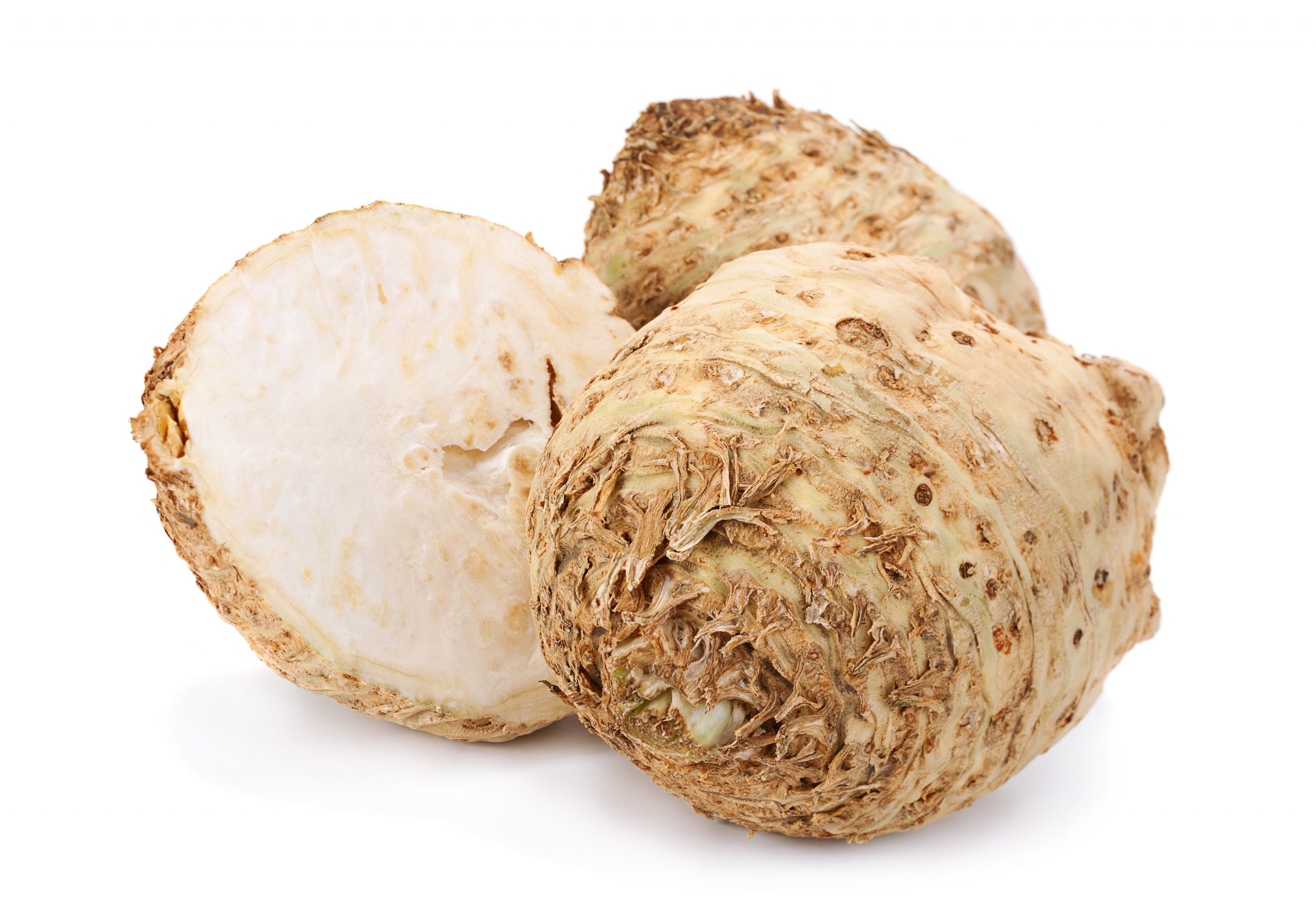
Celery root should be thoroughly washed before being prepared. The gnarled exterior can be peeled using a sharp knife or vegetable peeler to remove the tough brown skin and any small rootlets. For larger Celery roots, it is often necessary to cut away the sides to create a more even shape for slicing or dicing. Once peeled, Celery root can be cooked or eaten raw in salads and slaws. The small green leaves of the celery plants are also edible and can be used for garnishes, infusions, or as a flavor additive in recipes. Celery root is best when cooked quickly over high heat to preserve its crisp texture and sweet nutty flavors. It can be roasted, boiled, mashed, sautéed, or pureed for soups. When served raw, Celery root pairs well with sharp and tangy flavors such as lemon juice, mustard, and vinaigrettes. It can also be pickled for a longer shelf life and to enhance its flavor. Additionally, the green stalks of the celery plant can be steamed, sautéed, or eaten raw for a crunchy texture and mild flavor similar to celery.
Celery root is highly nutritious and contains many essential vitamins and minerals. It is low in calories but high in fiber, folate, vitamin B6, Vitamin K, magnesium, phosphorus, potassium. Celery root also contains antioxidants that can help reduce inflammation and improve overall health.
Overall, Celery root is a versatile vegetable that can be used in many dishes to add flavor and nutrition. Its unique nutty flavor makes it a great addition to soups, salads, slaws, and side dishes. It is also highly nutritious and full of essential vitamins and minerals that can benefit your health. With minimal preparation and easy cooking, this vegetable is sure to become a favorite in your kitchen.


