
Seasons/Availability
Daikon radishes are available year-round, with a peak season in the fall through winter.
Storage
Daikon radishes should be stored in the refrigerator, unwashed, and placed in a loosely-tied plastic bag. The leaves can also be stored separately from the root for up to four days but are best used within one day of purchase. Daikon radishes will keep fresh for up to two weeks if stored properly. Radishes can be frozen but this may reduce their crunchiness when eaten raw.
Use
Daikon radishes are most popularly eaten raw in salads or as a garnish atop sushi rolls; however, they can also be cooked by boiling, baking, steaming, stir-frying, or pickled. When cooked, daikon takes on a mild flavor and can be used in soups, pureed into sauces, and served with meat dishes. The root is also popularly fermented for use in kimchi or other pickling methods. Daikon radish leaves are typically cooked prior to consuming as raw leaves have a bitter taste; they can be used as a substitute for spinach or other leafy greens in salads, stir-fries, soups, and other dishes.
Nutritional Value
Daikon radishes are low in calories but high in Vitamin C and dietary fiber that help to improve digestion by increasing the amount of water present in the intestines. They contain a variety of antioxidants such as glucosinolates that work to prevent cell damage caused by free radicals. Daikon radishes are also a good source of potassium and magnesium, which can help to lower blood pressure. The leaves contain Vitamin A, calcium, iron, and other minerals that have been linked with improved bone health.
Preparation
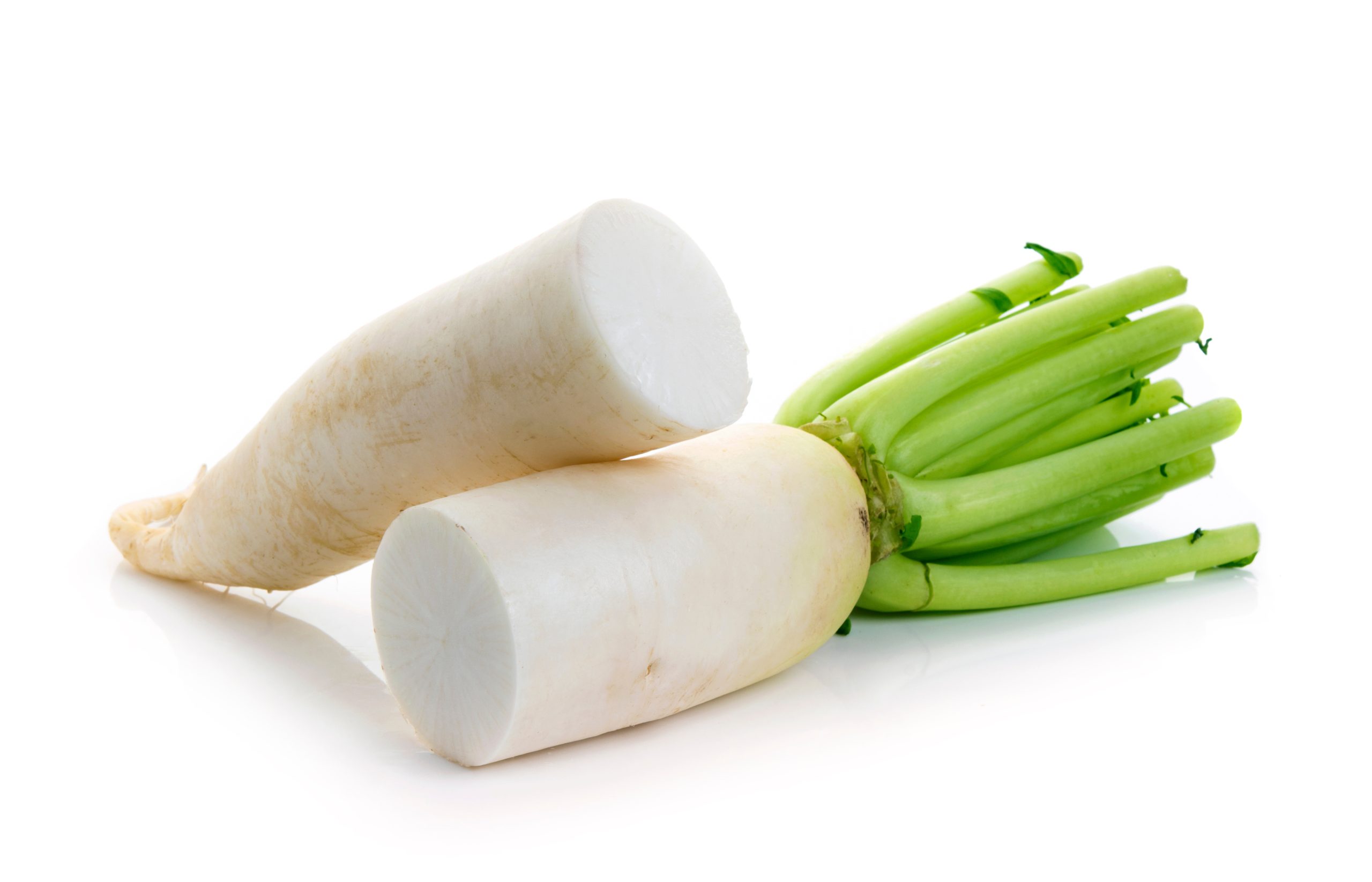
Daikon radishes should be washed thoroughly prior to preparation. Leaves should be removed from the root and discarded if wilted or yellowed; they may be eaten raw if fresh. When preparing daikon root, the skin can be left on for added texture or peeled off for a smoother finish depending on preference. The flesh of the root can then be cut into cubes or slices as desired before being cooked or eaten raw in salads or other dishes. Any leftover daikon can be kept stored in a plastic bag in the refrigerator for up to four days.
Health Benefits
Daikon radishes offer many health benefits stemming from their nutrient content. Eating daikon root regularly can help to prevent constipation, reduce cholesterol levels, and regulate blood pressure due to its high fiber content. Its antioxidant properties may also help protect against cancer and other chronic diseases. Additionally, the Vitamin C present in daikon radishes helps boost immunity by fighting off infection-causing bacteria and viruses. Eating the leaves of daikon can provide further nutrients that improve bone health and vision. Over time, incorporating daikon into meals regularly can lead to improved overall health and wellbeing with minimal effort required.

