Seasons/Availability
Escarole is available year-round.
Current Facts
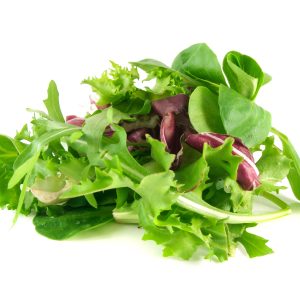
Escarole is a member of the chicory or endive family and botanically known as Cichorium endivia. The vegetable is most commonly sold in its head form with a loose, open arrangement of leaves at it’s center. There are many varieties of Escarole including broadleaf, curly leaf, and full-size Batavian.
Culinary Uses
Escarole is commonly used in salads, soups and stews as well as braised, steamed or sautéed dishes. The sharp, bitter flavor of Escarole can be balanced with sweet ingredients such as apples or nuts to make a tasty side dish. It pairs especially well with tomatoes, white beans, garlic, anchovies and Parmesan cheese. Escarole can also be served raw in salads with a light dressing or wilted in hot oil and garlic for a simple side dish. Cooking will reduce the bitter flavor of Escarole.
Nutritional Value
Escarole is an excellent source of vitamins A and K as well as fiber, folate, manganese and calcium. It is also a good source of vitamin C, thiamine and iron. The bitter flavor of Escarole is an indication of its nutrient density.
Storage
Escarole should be stored in the refrigerator unwashed and loosely wrapped in plastic wrap for up to five days. It can also be blanched and frozen if desired.
Preparation
Escarole should be washed and dried thoroughly before using. The outer leaves can be a bit tough and bitter, so it is best to use the lighter, inner leaves for salads or as a cooked vegetable. Cooking will mellow the bitter flavor of Escarole somewhat. The crunchy, crisp texture of the vegetable will also be retained if it is cooked quickly with high heat.