
Seasons/Availability
Galangal rhizomes are available year-round.
Preparation
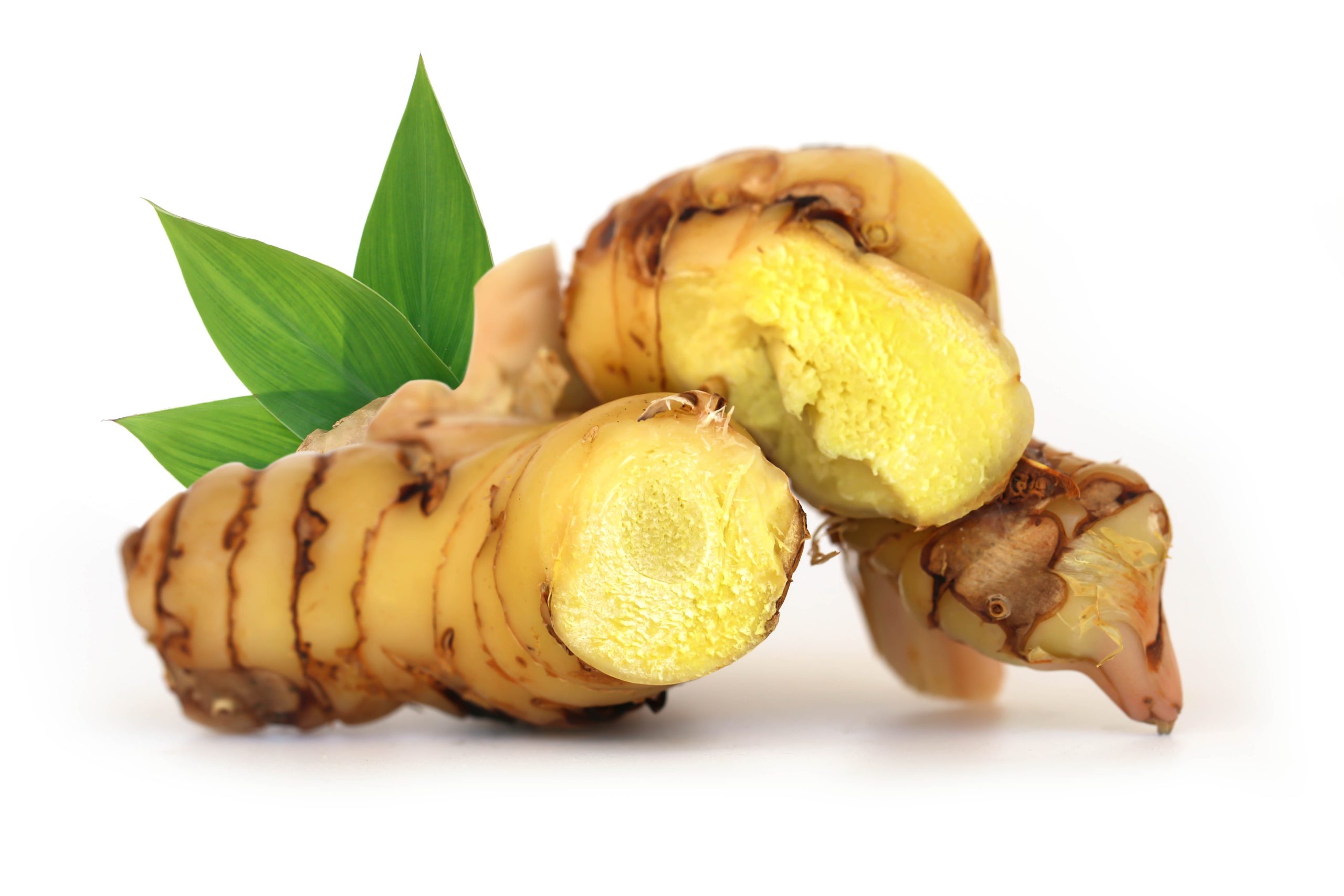
The rhizomes should be cleaned prior to use. Cut away any woody or brown spots and rinse the vegetable under cold, running water. Galangal is sometimes sold whole, but can also be found pre-sliced or chopped into small cubes for convenience. When preparing fresh rhizomes, a vegetable peeler can be used to remove the skin before slicing, grating, mincing, or crushing for recipes. If using dried galangal powder, add it directly to recipes without reconstituting it first.
Nutritional Value
Galangal offers some dietary fiber and trace amounts of vitamins A and C along with essential minerals like calcium, magnesium, potassium, iron, zinc, and manganese. It also contains essential oils such as cineole, borneol, geraniol, citral, limonene, and a variety of tannins.
Usage
Galangal is a popular ingredient in Southeast Asian cuisines including Thailand, Vietnam, Indonesia, Malaysia, and the Philippines. It can be added to soups and stews for flavor or used to make spice pastes for marinades and curries. In some regions of Burma it is served with tea instead of ginger or cinnamon. Galangal pairs well with other spices like chili peppers, cardamom pods, garlic cloves, lemongrass stalks, tamarind paste or pulp, coconut milk/creams, and fish sauce. Galangal can also be minced and added to salads, dressings, sauces, glazes, and stir-fried dishes for an earthy flavor profile. The rhizomes can be boiled or steamed before being blended into a paste with other ingredients like ginger or garlic. Dried galangal powder is often used in Thai cuisine as a seasoning agent for curries and soups. It should always be stored in an airtight container away from sunlight and heat to preserve its flavor.
In traditional medicine practices, galangal has been used for centuries to treat digestive ailments such as stomach pains and indigestion. It is believed to help soothe menstrual cramps and reduce inflammation associated with headaches, arthritis, and other illnesses. Galangal is also said to provide relief from nausea, vomiting, and flatulence. It can be consumed in the form of a tea or as an ingredient in tinctures and tonics used to treat various ailments.


