
Seasons/Availability
Lotus roots are available year-round, with a peak season in the fall through winter.
Uses
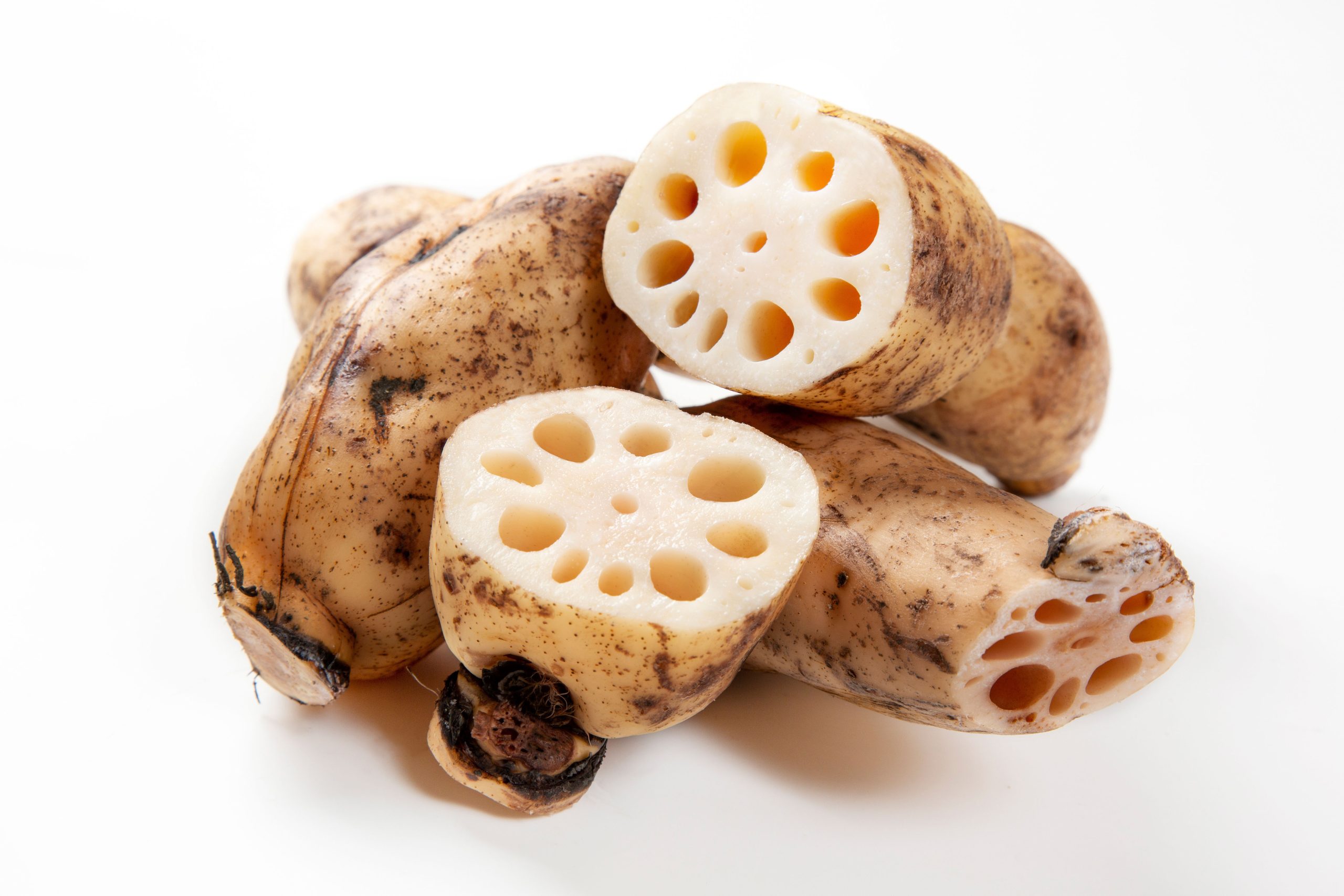
Lotus roots are best suited for cooked applications such as boiling, steaming, frying, and baking. The rhizomes can be boiled or steamed and served with a light sauce made from soy sauce and scallions or chili oil. They can also be sliced into thin rounds or discs and fried in a batter to create crispy fritters with sweet dipping sauces. Lotus roots are commonly chopped into cubes and added to stir-fries with vegetables, beef, pork, chicken, tofu, and rice dishes. The crunchy texture of the rhizomes complements soups such as miso soup with wakame seaweed or a hearty vegetable soup. In India and Nepal, they are boiled then mashed into a paste and served as a side dish. Lotus roots are also commonly added to desserts, tossed into salads for texture, and pickled for extended shelf life. They can be used fresh or dried in Chinese medicinal recipes to treat stomach disorders, improve circulation, reduce swelling and pain, and enhance skin complexion. Fresh lotus root should be consumed quickly for the best flavor and texture; however, they will keep up to two weeks when stored in a cool, dry place. The rhizomes can also be peeled, sliced thin, and stored in the refrigerator for up to four days. Dried lotus root can remain viable up to six months if kept in an airtight container away from direct sunlight.
In India and Pakistan, lotus root is cooked with spices and served as a side dish. In Japan, it is popularly used to make tempura or boiled and sliced into thin strips in soups. In Thailand and China, lotus root is thinly sliced and stir-fried with garlic, ginger, chili paste, soy sauce, and vegetables. It can be added to sweet dishes such as rice pudding or steamed cakes for additional flavor and texture. Lotus root can also be pickled in a brine solution of vinegar and sugar for extended shelf life. The rhizomes pair well with chilies, cilantro, green onions, sesame oil, honey glazes, pork belly slices, mushrooms, eggplant slices, zucchini slices crunchy peanuts, and bean sprouts. It is a great source of carbohydrates, fiber, vitamins A and C, iron, magnesium, potassium, zinc, copper and manganese.
Lotus root is an interesting vegetable with multiple uses in the kitchen. Its crunchy texture and subtle sweetness make it an ideal accompaniment to many different dishes from around the world. From salads to stir-fries to desserts, lotus root can bring a unique flavor profile to any plate. Its health benefits are also impressive; full of essential vitamins and minerals, this rhizome provides numerous nutritional benefits with few calories. Try adding lotusroot to your next dish for a delicious twist!


