
Seasons/Availability
Available year-round, Parsnips have a peak season in winter.
Selection
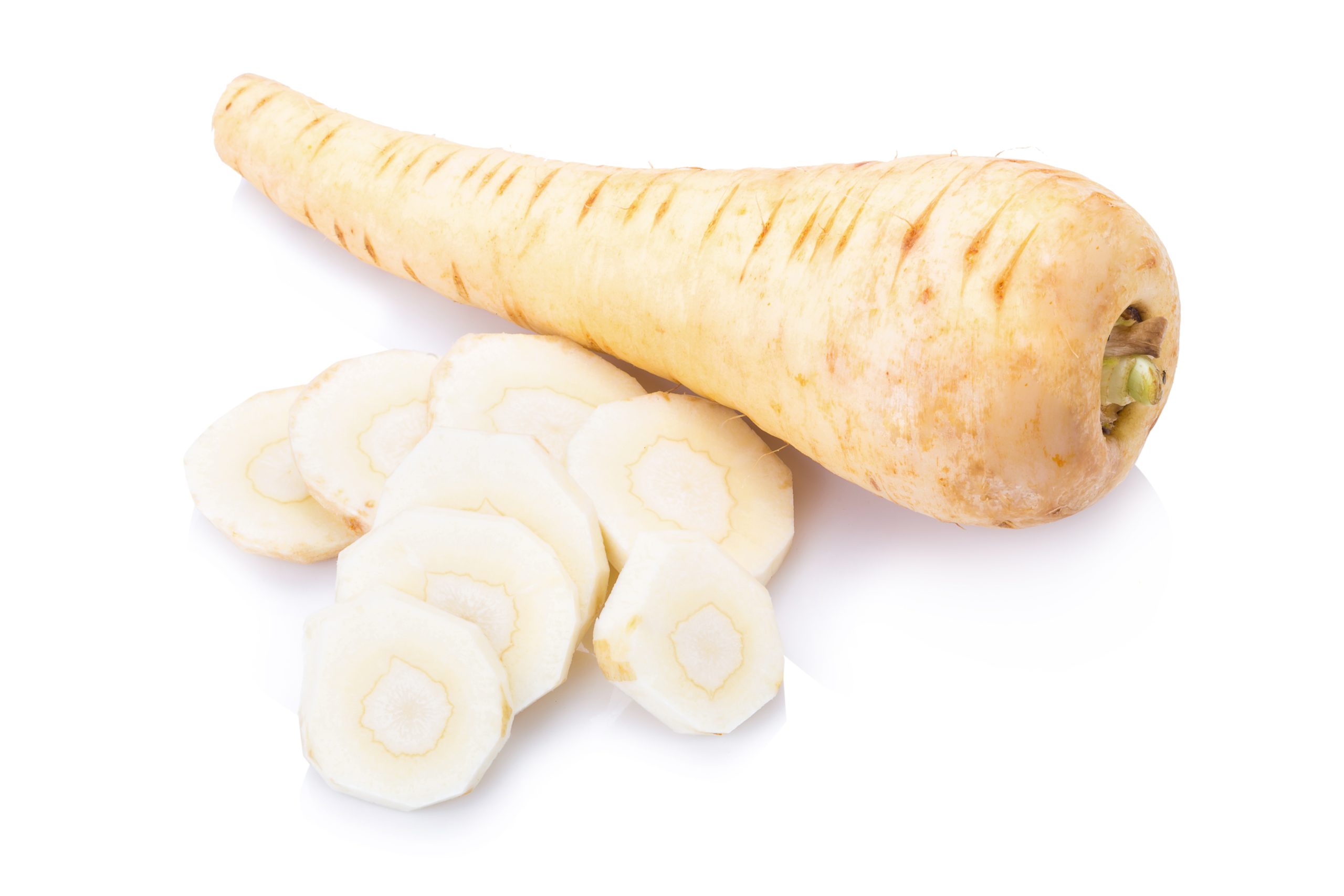
When selecting Parsnips, choose roots that are firm and not too large. Avoid any with soft spots, wrinkles or those that have started to sprout. The skin should be smooth and creamy in color with minimal blemishes.
Storage
Store Parsnips in a sealed plastic bag in the refrigerator for up to two weeks. Be sure to remove any dirt or mud from their surface before storing. To freeze, blanch them first in boiling water for about 4 minutes before plunging into a cold ice bath; drain them completely and wrap tightly in plastic bags before freezing. This will preserve their texture and flavor longer than if you froze them raw.
Preparing/Serving
Parsnips are best when cooked, and can be boiled, steamed, roasted or mashed. Mashed Parsnips make a great alternative to mashed potatoes and can be combined with other root vegetables like carrots for added color and flavor. To prepare, peel the skin off of the tapered root with a vegetable peeler or sharp knife before cutting into chunks for boiling, slicing thinly for roasting or mashing. Enjoy parsnips in traditional recipes such as Shepherd’s Pie or Sausage and Mash; toss diced raw parsnip in salads along with other root vegetables like beetroots; or puree them into soup.
Nutritional Value
Parsnips are an excellent source of dietary fiber, Vitamin C, and Folate. They are also a good source of Potassium, Magnesium, Iron and Vitamin E.


