
Seasons/Availability
Purple carrots are available year-round.
Nutritional Value
Purple carrots are a good source of dietary fiber, vitamin C, and carotenoids such as beta-carotene. They also contain smaller amounts of iron, calcium, magnesium, and potassium.
Preparation & Uses
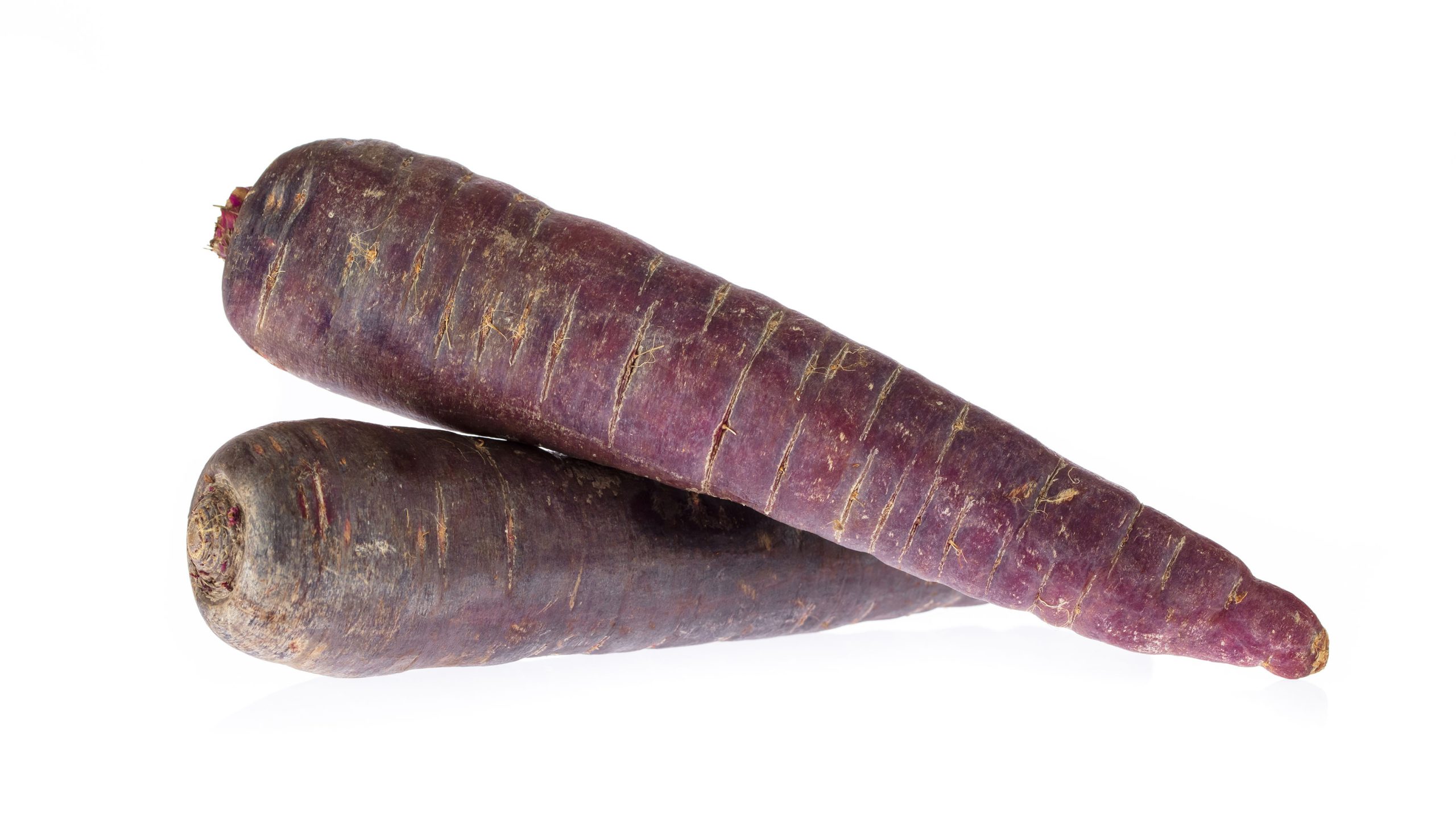
Fresh purple carrots can be eaten raw or cooked. For best results when cooking, steam or roast the carrots to bring out their natural sweetness. Roasting helps caramelize the natural sugars and makes them more tender. The leaves are also edible and can be used as a garnish or in salads. In addition to being cooked, purple carrots can be juiced, pickled, pureed into soups and dips, grated into salads, or mixed into stir-fries. They can also be dried or made into jams and preserves. When buying purple carrots, look for firm roots with bright skin and no signs of wilting. Store them in a cool, dry place and use as soon as possible for best flavor and texture.
Safety
Purple carrots are generally safe to consume in moderation as part of a healthy diet. As with any vegetable, it is important to thoroughly wash them before eating to remove any dirt or bacteria. People who suffer from allergies should consult their healthcare provider before eating purple carrots.

