
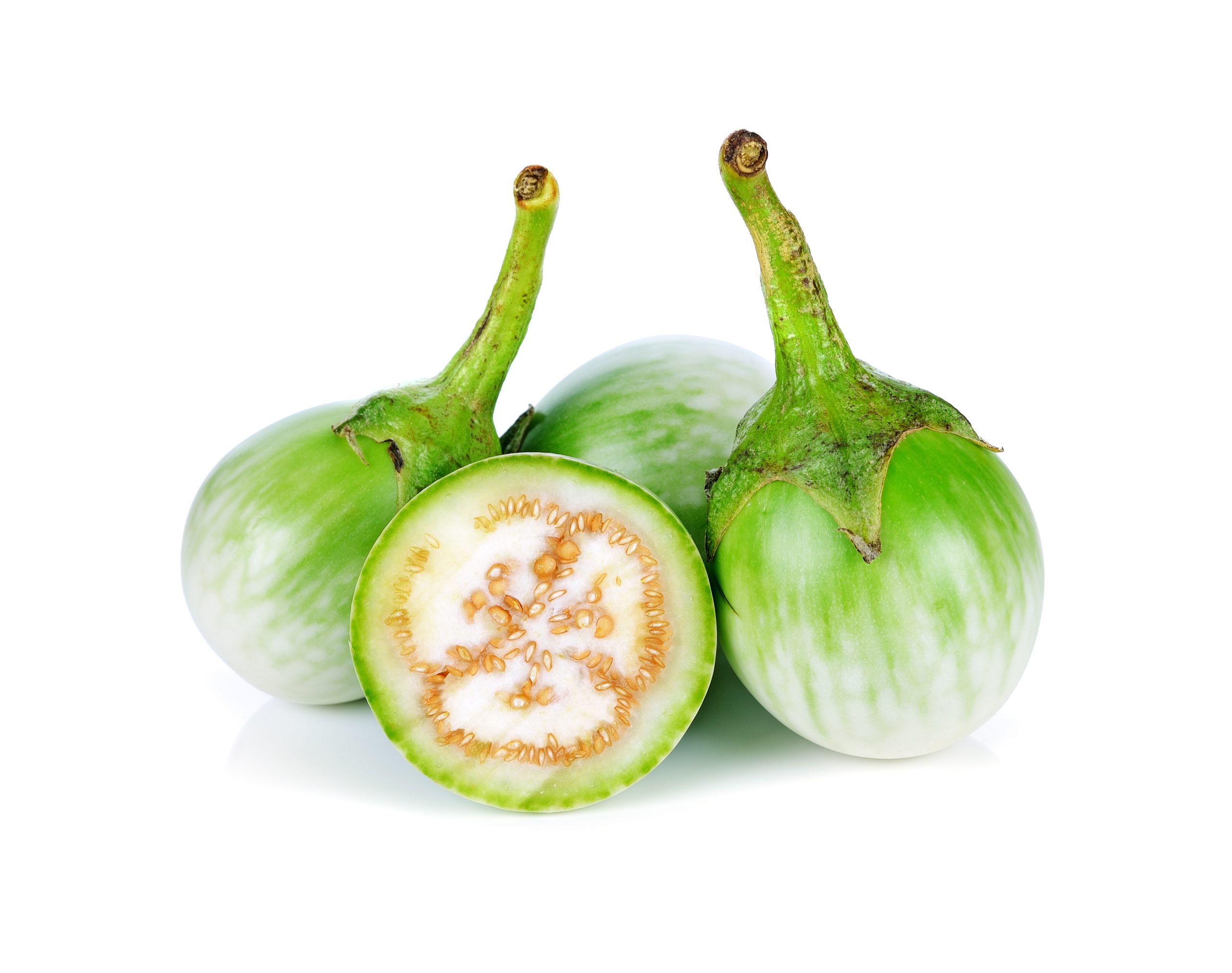
Seasons/Availability
Thai eggplants are available year-round.
Purchasing and Storage
When selecting Thai eggplants, choose those that are firm and heavy for their size. Avoid any with soft spots or blemishes as these can indicate spoilage. Store in the refrigerator for up to a week.
Preparation
Thai eggplants can be eaten raw or cooked. To prepare, wash the fruit and cut or slice into desired shapes. The skin can be left on or removed depending on the dish being prepared. Thai eggplants are often cooked in stir-fries, curries, braises, soups, and stews. They are also grilled, baked, roasted, fried, and pickled. Additionally they can be made into jams and relishes. Further, Thai eggplants can be used as a vegetable side dish and served with a variety of proteins.
Nutritional Value
Thai eggplants are low in calories and contain very few carbohydrates but offer some fiber. They are also a source of essential vitamins and minerals, including vitamin C, magnesium, manganese, potassium, phosphorus, and iron. Additionally, Thai eggplants contain phytonutrients that may help reduce inflammation and improve overall health.
Uses
Thai eggplants can be used in a variety of dishes. They are popularly added to stir-fries, curries, braises, soups, stews, and salads for flavor and texture. The inner flesh can also be scooped out and mashed to make dips or spreads. Further, Thai eggplants are often grilled, baked, roasted, fried, pickled, and made into jams and relishes. They pair well with a variety of proteins such as chicken, beef, pork, fish, and tofu. Additionally they can be used as a vegetable side dish and served with rice or other grains.


