
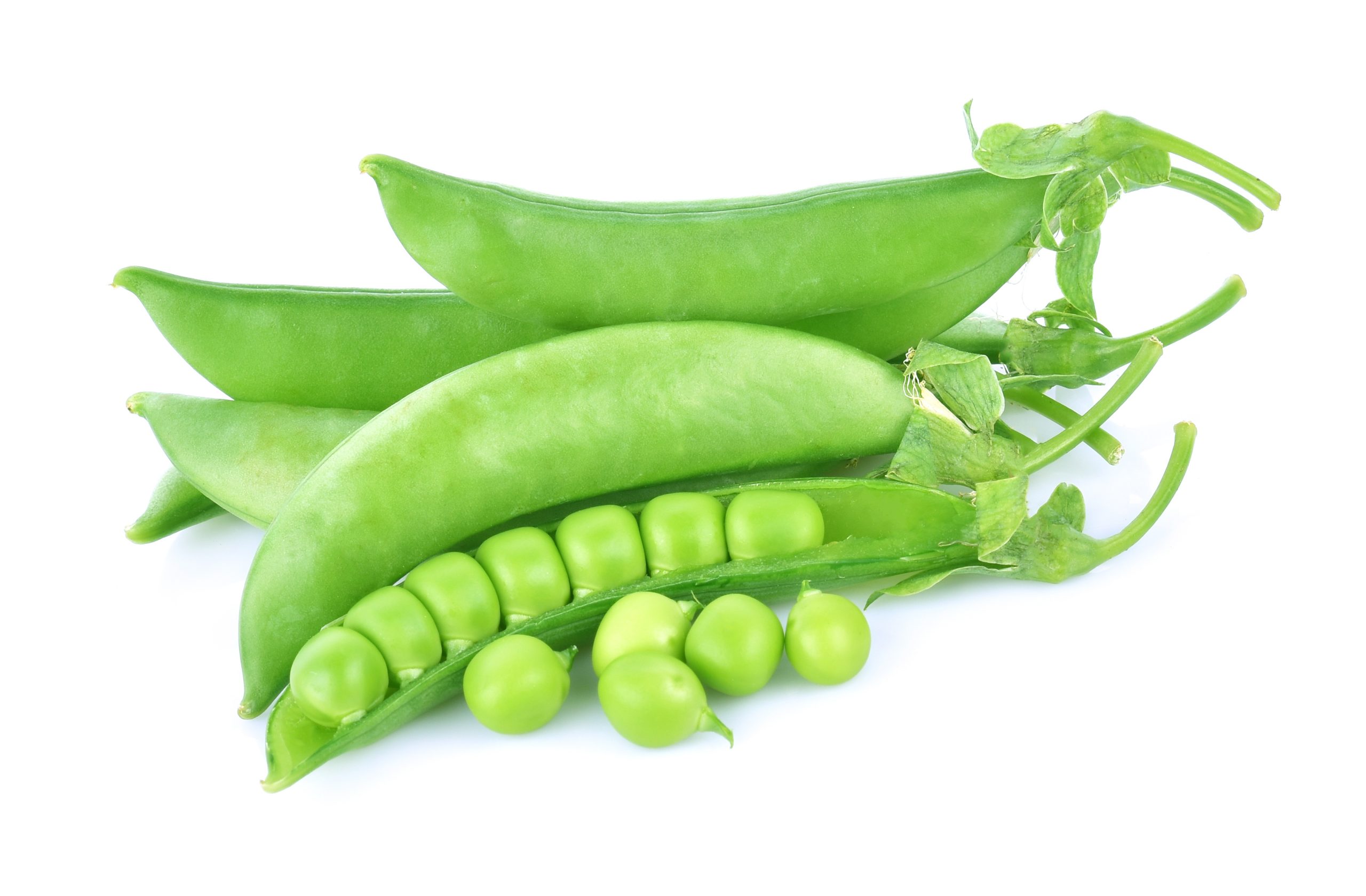
Seasons/Availability
Sugar Snap peas are available year-round.
Current Facts
Sugar Snap peas are a member of the Fabaceae family, more commonly known as the Leguminosae or pea family. The botanical name for Sugar Snap peas is Pisum sativum var. macrocarpon.
Nutritional Value
Sugar Snap peas are low in calories but an excellent source of vitamins A and C, folate and dietary fiber. They also provide essential minerals including manganese, potassium and iron. Additionally, dried forms of the pea contain high amounts of protein; up to 25% by weight in some varieties.
Usage
Sugar Snap peas can be eaten raw or cooked; they make a great snack on their own, or can be added to salads and stir-fries. The pods are also good for pickling and freezing. When cooked, the sugars in the pea will caramelize so it is best not to overcook them. Peas can also be shelled like other types of peas and used in soups and stews. Dried forms of the peas make a great addition to soups, casseroles, dals, breads and side dishes. They offer a nutty flavor similar to lentils but with a softer texture when cooked. Young vines can be steamed or boiled while fresh leaves can be served raw in salads or lightly sautéed in butter. Fresh flowers can also be eaten raw as a garnish or used as a component in salads. Pea tendrils are delicious when sautéed with garlic and butter.
Storage
Sugar Snap peas should be stored in the refrigerator; they will keep for up to a week when stored this way. Peas can also be frozen; simply blanch them, cool them down quickly and store them in an air-tight container for up to six months. Dried forms of the pea can be kept sealed in an air-tight container at room temperature for up to one year.

