
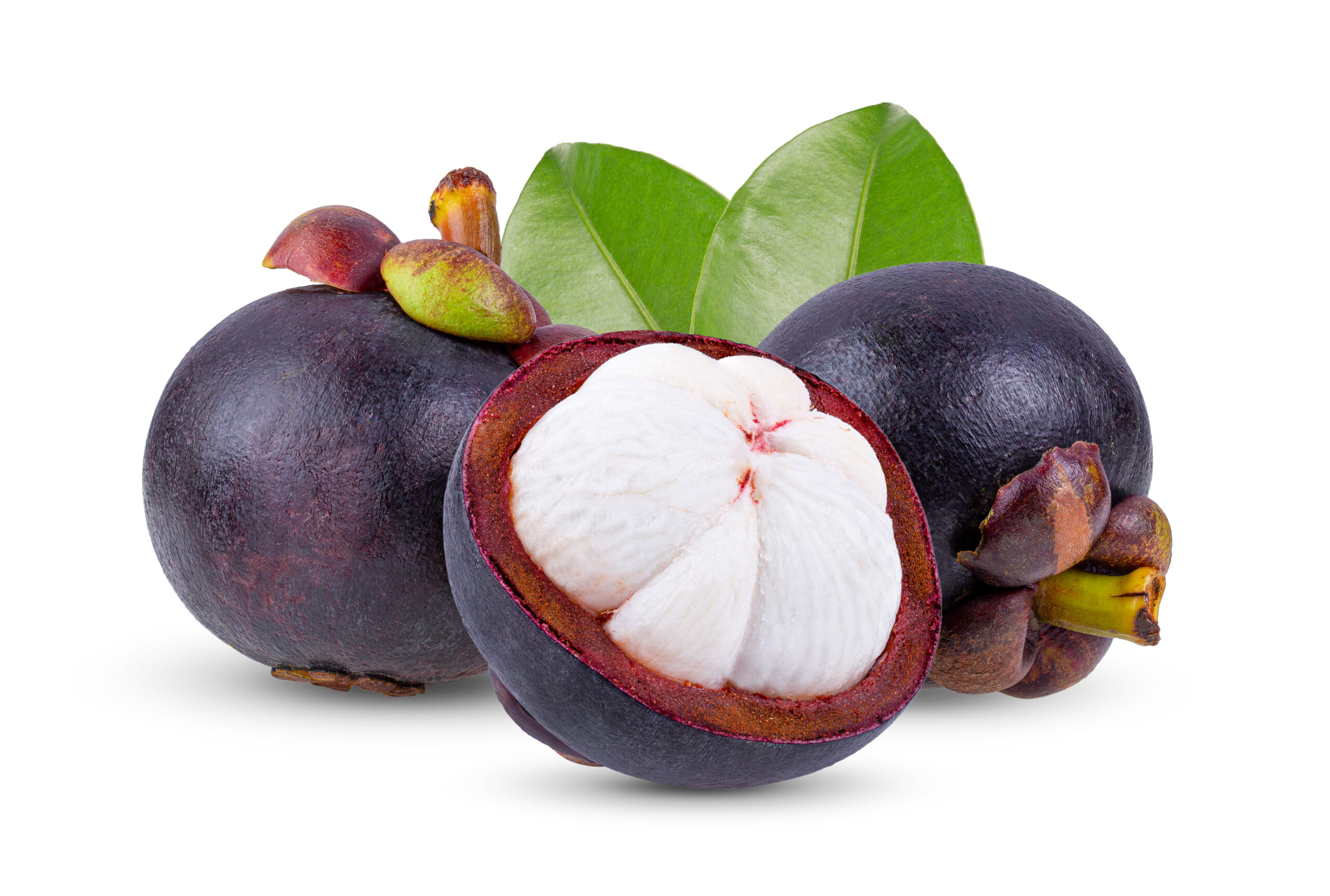
Seasons/Availability
Mangosteens are available early summer through early winter.
Current Facts
The mangosteen is scientifically classified as Garcinia mangostana and its family includes other tropical fruits such as the gambooge, garcinia cambogia and the brindleberry. The fruit is native to Indonesia but can now be found in many other tropical and subtropical areas. In Thailand it is called mong kut and in Vietnam, manh khut.
Selection
When selecting a mangosteen, look for firm fruits that are heavy for their size with deep burgundy shells. Avoid any fruits with soft spots or are cracks in the rind. Ripe fruit considered will be fragrant and slightly super yielding when pressed.
Storage
Mangosteens should be kept refrigerated and eaten within two days- of purchase. They can also be frozen to keep fruits them fresh longer. When due freezing, it is to best to separate the segments from the outer husk before storing. To thaw mangosteen, place them in a sealed bag and store them at room temperature.
Nutrition
Mangosteens are high in dietary fiber, vitamin C and xanthones, all of which contribute to its health benefits. Vitamin C helps protect the body against infections while xanthones provide antioxidant activity and helps promote healthy cell growth. Mangosteens’ dietary fiber content also help support digestive health. Additionally, mangosteens contain various minerals such as potassium, magnesium, and calcium that are important for bone health and metabolism.
To get the most out of your mangosteen consumption it is best enjoyed fresh or used as part of a recipe, rather than processed into juice or other form. Enjoy this wonderful fruit today, for its unique taste and its powerful health benefits!


